

Tristan is a traditionally masculine name with Celtic and medieval European roots. It is most often said to mean “sorrowful” or “sad,” but the real story is more interesting: the name likely began as a Pictish name, and the “sad” meaning arrived later through a French word. So, what does Tristan mean? In short, its original meaning is uncertain, while its best-known association is sorrow. This guide explains the origin, pronunciation, legend, symbolism, and popularity of the name so you can understand it fully.
Tristan Name Quick Reference
| Detail | Information |
| Name | Tristan |
| Commonly reported meaning | “Sorrowful” or “sad” (through French triste) |
| Likely original source | Pictish name Drust / Drustan (meaning uncertain) |
| Origin | Celtic, Pictish, Welsh, and medieval French |
| Pronunciation | TRIS-tuhn (two syllables) |
| Gender | Traditionally masculine |
| Common variations | Tristram, Tristen, Tristin, Tristan, Drystan, Tristano |
| Famous legend | Tristan and Isolde |
What Does the Name Tristan Mean?
The Meaning Behind the Name Tristan
The name Tristan is most commonly explained as meaning “sorrowful” or “sad.” This is the answer you will see on most baby name websites, and it is not wrong. However, it describes how the name was understood in the Middle Ages, not necessarily what it meant when it first appeared.
Does Tristan Mean Sadness or Sorrow?
Yes, in popular usage Tristan is linked with sadness. Medieval writers connected the name with the Old French word triste, meaning “sad,” and they built it into the story of the hero’s tragic birth and life. Because of this, the sorrowful meaning stuck. Still, it is better described as a later association than as the name’s true origin.
What Is the Original Meaning of Tristan?
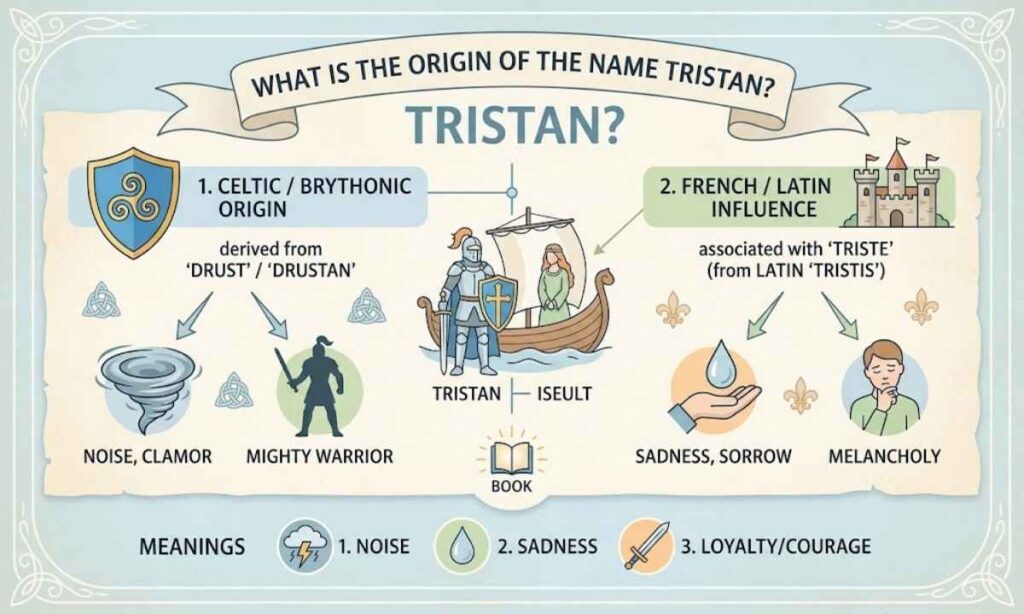
The original meaning of Tristan is uncertain. The name is generally traced back to the Pictish name Drust or Drustan, and the meaning of that name is not clearly known. Some scholars suggest links to words meaning “tumult” or “riot,” but these ideas are debated. This is why careful sources say the etymology is unclear rather than giving one definite answer.
What Is the Origin of the Name Tristan?
Celtic, Pictish, and Welsh Connections
Tristan comes from the Celtic-speaking world of early medieval Britain. The Picts, who lived in what is now Scotland, used the name Drust, and Drustan appears as a diminutive form of it. In Welsh tradition, the name appears as Drystan or Trystan, and a hero with this name features in early Welsh stories. These versions show that the name travelled across Celtic communities before it reached mainland Europe.
How the French Word Triste Influenced Its Meaning
When the legend crossed into French-speaking lands, the name was reshaped. Writers noticed that Tristan sounded like triste, the French word for “sad,” and they used this wordplay in their tales. In the story, Tristan’s mother dies in childbirth, so the hero’s name is said to reflect a sorrowful beginning. This is how a Pictish name came to be tied to sadness.
How Tristan Became a Recognized Name
The name spread through medieval poems and romances written in French, German, and English. As the story became popular across Europe, parents began using Tristan and its variations, such as Tristram in English. Over time, the name moved from legend into everyday life and has stayed in use for centuries.
How Do You Pronounce Tristan?
Correct Pronunciation and Syllables
Tristan is pronounced TRIS-tuhn. It has two syllables, with the stress on the first one. The ending sounds like a soft “tuhn,” not a hard “tan.”
Common Spelling Variations of Tristan
The name appears in many forms across languages and regions. The table below lists the most common ones.
| Variation | Language or Region |
| Tristram | English (traditional form) |
| Tristen / Tristin | Modern English spellings |
| Tristian | Alternative English spelling |
| Tristán | Spanish |
| Tristão | Portuguese |
| Tristano | Italian |
| Drystan / Trystan | Welsh |
What Is the History of Tristan in Medieval Legend?
The Story of Tristan and Isolde
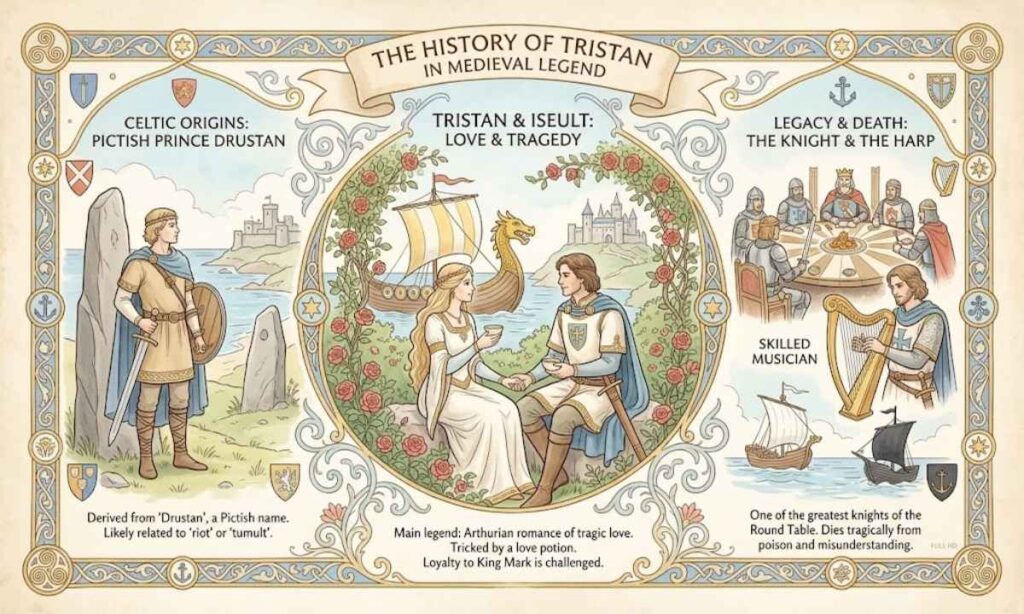
The most famous Tristan story is the tragic romance of Tristan and Isolde. Tristan, a knight, is sent to Ireland to bring the princess Isolde back to marry his uncle, King Mark of Cornwall. On the journey home, the two accidentally drink a love potion and fall deeply in love. Their forbidden relationship leads to secrecy, separation, and a heartbreaking end. The story has been told by many medieval poets and was later retold in Richard Wagner’s opera in 1865.
Tristan’s Connection to King Arthur and the Knights of the Round Table
In later versions of the legend, Tristan is also included among the knights of King Arthur’s Round Table. English writers such as Sir Thomas Malory placed him alongside Arthurian heroes, describing him as a skilled and honorable knight. This connection helped keep the name alive in English-speaking cultures.
How the Legend Influenced the Name’s Popularity
The legend gave the name a romantic and noble image. Readers and audiences admired Tristan’s loyalty, courage, and passion, even though his story ends in tragedy. This is a major reason why the name survived for centuries and remains attractive to parents today.
Is Tristan a Boy’s or Girl’s Name?
Gender and Traditional Usage
Tristan is traditionally a masculine name. In the legend, Tristan is a male knight, and the name has been used mainly for boys throughout its history.
Is Tristan a Gender-Neutral Name?
Tristan is not usually considered gender-neutral, but some parents use it for girls, often with creative spellings such as Tristyn. Feminine forms like Tristana and Trista also exist. For most families, however, Tristan remains a boy’s name.
What Is the Spiritual Meaning of Tristan?
Symbolism Associated With Love and Loyalty
Spiritually and symbolically, Tristan is linked with deep love, devotion, and faithfulness. These ideas come from the legend, not from any religious text, so they should be seen as cultural symbolism. If you enjoy reading about love and loyalty in a faith-based setting, you may like our good morning prayer for my love and new week prayer for my love.
Does Tristan Have a Biblical Meaning?
No, Tristan is not a biblical name. It does not appear in the Bible, and it has no official biblical meaning. Any spiritual meaning given to it is personal or symbolic. Readers who want scripture-based spiritual guidance can explore our warfare prayer points with scriptures, as well as our pornography prayer points and pornography prayer points with scriptures for those seeking spiritual support in personal struggles.
Is Tristan Associated With Any Particular Religion?
Tristan is not tied to any single religion. It comes from medieval European legend, which developed within a largely Christian culture, but the name itself has no religious meaning. People of many faiths and backgrounds use it. For those interested in prayer traditions, our prayer points for church growth and Santa Muerte prayer in English offer different perspectives on prayer.
How Popular Is the Name Tristan?
Tristan’s Popularity in the United States
In the United States, Tristan became noticeably popular in the late 1990s and early 2000s, when it ranked among the more common boys’ names. Since then its use has gradually declined, though it remains familiar and well recognized. For exact yearly rankings, check the official U.S. Social Security Administration baby name data.
Famous People Named Tristan
Several well-known people share the name, including:
- Tristan Thompson, professional basketball player
- Tristan Tzara, Romanian-French poet and founder of the Dada movement
- Tristan Harris, technology ethicist and co-founder of the Center for Humane Technology
What Are the Nicknames and Variations of Tristan?
Common Nicknames for Tristan
Popular nicknames include Tris, Tristy, Tan, and Tano. Many families simply use the full name because it is short and easy to say.
Alternative Spellings and International Forms
Beyond the variations listed earlier, the name has taken many forms across Europe, including Tristano in Italian, Tristão in Portuguese, and Drystan in Welsh. Each form keeps the same legendary roots.
Names Similar to Tristan
If you like Tristan, you may also like names with a similar sound or legendary feel, such as Tristram, Tristin, Gawain, Percival, Lancelot, Arthur, and Cormac.
Is Tristan a Good Name for a Baby?
Personality Traits and Associations
Tristan is often associated with romance, loyalty, creativity, and a thoughtful nature. These are cultural impressions drawn from the legend, not proven personality traits, but they give the name a warm and noble feel.
Reasons Parents May Choose the Name Tristan
Parents often choose Tristan for its legendary background, its easy pronunciation, and its balance of classic and modern style. It is short, strong, and works well in many languages. If you are welcoming a new child and hoping for a bright future for them, you may also enjoy our exam success wishes and prayers.
Frequently Asked Questions
What does Tristan mean in English?
Tristan is commonly translated as “sorrowful” or “sad,” through the French word triste. However, its original Pictish meaning is uncertain.
Is Tristan a Celtic name?
Yes, Tristan is generally considered Celtic in origin. It likely comes from the Pictish name Drust or Drustan and has Welsh forms as well.
Does Tristan mean sadness?
In popular usage, yes, because medieval writers linked it to the French word triste. This is a later association and may not be the name’s true original meaning.
What does Tristan mean spiritually?
Spiritually, Tristan symbolizes love, loyalty, and devotion, based on the legend of Tristan and Isolde. These meanings are cultural, not religious or biblical.
Is Tristan a rare name?
No, Tristan is not rare. It was fairly popular in the United States in the early 2000s and is still widely known today.
What is the female version of Tristan?
There is no single official female version. Tristana, Trista, and Tristyn are sometimes used as feminine alternatives.
Is Tristan mentioned in the Bible?
No, the name Tristan does not appear in the Bible. It comes from Celtic and medieval European legend.
What names are similar to Tristan?
Similar names include Tristram, Tristin, Tristen, Gawain, Percival, and Lancelot. Many of these also come from medieval legend.
Conclusion
So, what does Tristan mean? The name has uncertain Pictish roots, a later and widely known association with sorrow through the French word triste, and a rich cultural background in the legend of Tristan and Isolde. Rather than meaning only “sad,” Tristan carries a story of love, loyalty, and tragedy that has lasted for centuries. Understanding this difference makes the name more meaningful, whether you are choosing it for a child or simply curious about its history.