

Many parents and curious readers ask whether Tristan in the Bible is a real name found in Scripture. The short answer is no. The name Tristan does not appear in the Old or New Testament, and no biblical character carries it.
Still, people often wonder what the name means spiritually. Its commonly given meaning, sorrowful, can connect with biblical themes of comfort, hope, and perseverance. This guide explains the origin and history of Tristan, shares related Bible verses, and helps parents decide whether it suits a Christian or Catholic baby boy. You will also find spelling variations and similar biblical names.
Is Tristan in the Bible?
No, Tristan is not mentioned in the Bible. No person, place, or title in Scripture is recorded under this name, in any major English translation or in the original Hebrew and Greek texts.
That means Tristan is not a biblical name in the literal sense. It entered Christian cultures later, mainly through medieval storytelling in Britain and France.
It helps to separate two ideas:
• Biblical appearance: whether a name is actually written in Scripture. Tristan is not.
• Spiritual interpretation: how a believer reflects on a name’s meaning in light of biblical themes. This is personal and not a doctrine.
What Does Tristan Mean in the Bible?
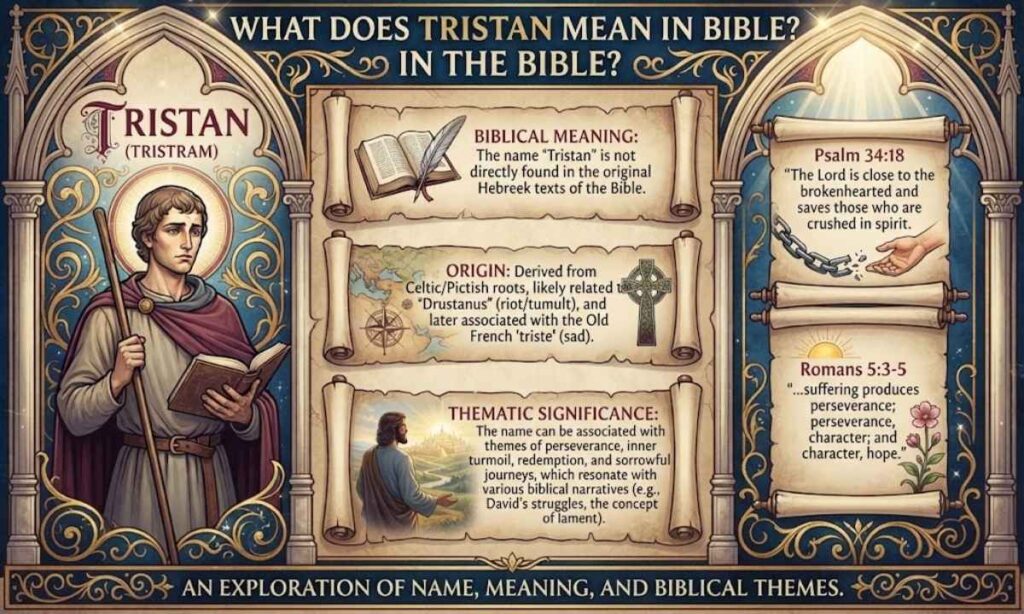
The Bible does not give Tristan a direct meaning because the name is absent from it. Any meaning comes from later language history, not from Scripture.
The meaning most often attached to Tristan is sorrowful. Some Christians connect that idea with hope, comfort, and perseverance, since the Bible speaks often about God meeting people in sorrow. Linguistic meaning and personal spiritual significance are two separate things, and it is wise to keep them apart.
Does Tristan Mean Sorrowful or Sad?
Yes, it is commonly linked to sorrow. This comes from the Old French word triste, meaning sad, which writers tied to the name in medieval romances.
Can Tristan Have a Positive Spiritual Meaning?
It can, as a matter of personal reflection. Parents may see the name as a reminder that sorrow is not the end of the story, a theme found across Scripture.
What Is the Difference Between Biblical and Symbolic Meaning?
A biblical meaning comes from a name’s use in Scripture, such as the Hebrew roots of Daniel or Nathan. A symbolic meaning is a meaning a family chooses to find in a name. Tristan only has the second kind.
Read more 40 Prayer Points for Church Growth with Scriptures.
Origin and History of the Name Tristan
The exact origin of Tristan is uncertain. Most name histories point to an early Brittonic or Pictish form, usually written Drustan or Drust, which later became Tristan in French and English usage. Because the records are scarce, any single explanation should be treated as likely rather than proven.
Medieval literature then shaped the name. Poets in France and Britain told the story of a knight named Tristan, and the name spread across Europe through those tales.
Is Tristan a Celtic, Pictish, or French Name?
It has roots in all three worlds. The early form appears tied to Celtic and Pictish naming, while the spelling we use today was shaped by French literary tradition.
How Did Tristan Become Associated With Sorrow?
Writers of French romances linked the name to the word triste. In some versions of the tale, the hero is born in sad circumstances, which made the connection feel natural to audiences.
What Is the Story of Tristan and Isolde?
It is a medieval love tragedy. Tristan, a knight serving King Mark of Cornwall, escorts the Irish princess Isolde (also called Iseult) to marry the king. The two fall deeply in love, often through a love potion, and the story ends in sorrow. It is a legend, not a Bible story.
What Is the Spiritual Significance of Tristan?
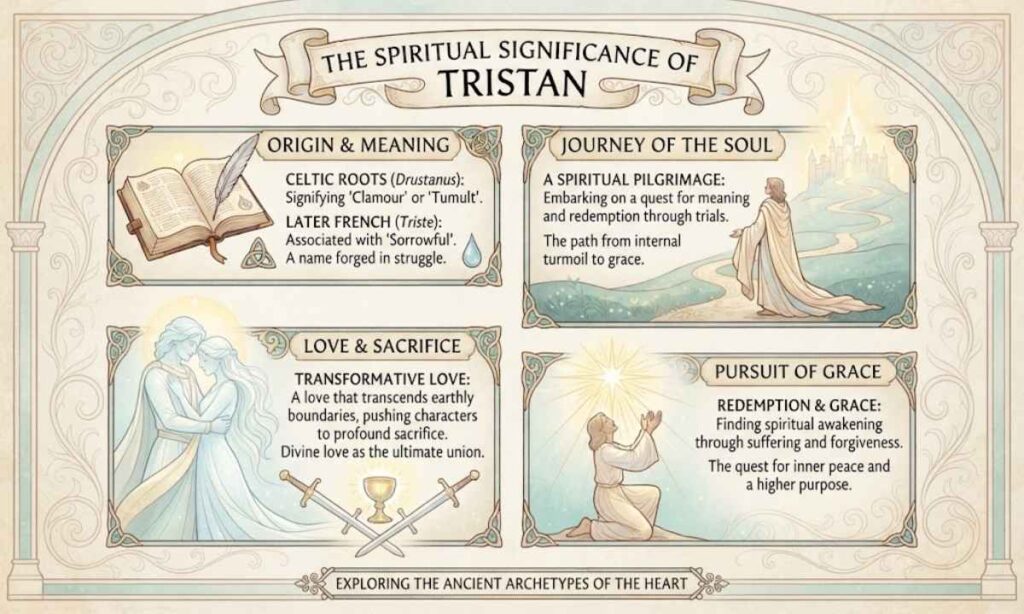
Tristan has no spiritual destiny attached to it. A name does not guarantee a person’s character, faith, or future. Its significance is what a family chooses to draw from it, guided by biblical principles.
The most natural link is the contrast between sorrow and hope. Scripture does not hide grief, yet it keeps pointing to comfort and renewal.
Tristan and the Biblical Theme of Overcoming Sorrow
The Psalms, the Gospels, and Revelation all describe a God who comforts those who suffer. A parent may see Tristan as a gentle reminder of that promise.
How the Name Connects With Faith and Perseverance
Faith in the Bible is often shown through endurance in hard seasons. A name tied to sorrow can serve as a quiet symbol of trusting God through difficulty.
What Christians Can Learn From Its Symbolic Meaning
• Sorrow is a real part of life, and Scripture treats it honestly.
• God’s comfort is presented as personal and present.
• Hope in the Bible looks forward to a restored future.
Bible Verses That Relate to the Meaning of Tristan
None of these passages mention Tristan. They are included because they speak to the themes of comfort, hope, and overcoming suffering that readers often connect with its meaning.
Psalm 34:18: God Is Close to the Brokenhearted
This psalm says the Lord is near to those with broken hearts and rescues those crushed in spirit. It offers reassurance that sorrow does not separate a person from God.
Matthew 5:4: Comfort for Those Who Mourn
In the Sermon on the Mount, Jesus says those who mourn will be comforted. It is one of the clearest New Testament statements linking grief with promised comfort.
Romans 5:3-4: Suffering Produces Perseverance
Paul explains that suffering produces perseverance, perseverance produces character, and character produces hope. It fits the idea of sorrow leading toward strength over time.
Isaiah 61:3: Beauty for Ashes
This prophecy speaks of God giving beauty in place of ashes and gladness in place of mourning. It is a well known picture of sorrow being turned into renewal.
Revelation 21:4: A Future Without Sorrow
The passage describes a future where God wipes away every tear and mourning ends. It closes the biblical story with the complete removal of sorrow.
Is Tristan a Good Christian or Catholic Baby Name?
Yes, Christians are free to choose names that do not appear in Scripture. Many common Christian names, such as Alexander or Henry, are not biblical. What matters more is the family’s beliefs, traditions, and the meaning they hope to honor.
Christian acceptance and Catholic naming customs are related but separate. Catholic practice often favors saint names, and canon law asks that a name not be foreign to Christian sensibility. Tristan is not commonly listed among canonized saints, so it is usually not chosen for a patron saint.
Can Christians Name Their Son Tristan?
Yes. Nothing in the Bible forbids it, and the name has a long history in Christian Europe.
Is Tristan an Acceptable Catholic Baby Name?
Generally yes, though some parishes encourage a saint’s name too. Many families use Tristan as a first name and add a saint as a middle name.
What Should Christian Parents Consider Before Choosing Tristan?
• The meaning and history you want to associate with the name.
• Family traditions and any preferences from your church or parish.
• Whether a saint or biblical middle name would add spiritual meaning.
• How the name sounds with your surname.
Tristan Name Meaning, Variations, and Similar Names
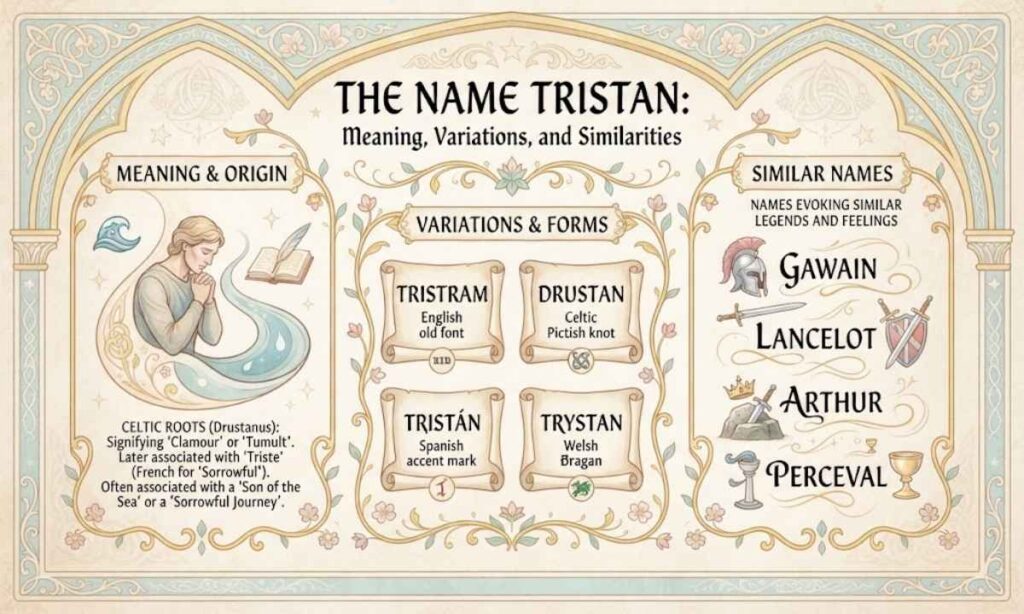
Tristan appears in several spellings. Each one traces back to the same name, though their language histories differ slightly. The table below gives a quick comparison.
| Spelling | Background | Common Meaning |
| Tristan | Standard English and French form | Sorrowful |
| Tristen | Modern English variant spelling | Sorrowful |
| Trystan | Welsh form | Linked to the early Celtic name |
| Drustan | Early Pictish and Brittonic form | Uncertain |
Tristan vs. Tristen vs. Trystan: What Is the Difference?
The difference is mostly spelling and language tradition. Tristen is a modern respelling, while Trystan reflects the Welsh form. None of them appears in the Bible.
What Are Similar Biblical Names to Tristan?
Parents who want a name found in Scripture with a comforting meaning have several options, as shown below.
| Biblical Name | Commonly Given Meaning |
| Noah | Rest or comfort |
| Nehemiah | Comforted by the Lord |
| Barnabas | Son of encouragement |
| Nathaniel | Gift of God |
Is Tristan a Boy’s Name?
Yes, Tristan is traditionally a masculine name. Variants such as Tristyn are sometimes used for girls, but this is much less common.
Frequently Asked Questions
Is Tristan mentioned anywhere in the Bible?
No. The name does not appear in any book of the Old or New Testament.
What does Tristan mean in the Bible?
The Bible gives it no meaning. Its common meaning, sorrowful, comes from later European language history.
Does Tristan have a Hebrew or Greek meaning?
No. Tristan has Celtic, Pictish, and French roots, not Hebrew or Greek ones.
Is Tristan a biblical or Christian name?
It is not biblical, but Christians can use it freely. It has been used in Christian Europe for centuries.
Does Tristan mean sorrow or strength?
Its linguistic meaning is sorrow. Strength is only a symbolic reading some parents choose to draw from the knight in the legend.
What Bible verse is associated with the name Tristan?
No verse is officially tied to it. Matthew 5:4 and Psalm 34:18 are popular choices because they speak of comfort in sorrow.
Is Tristan a good name for a Christian baby boy?
Yes, it is a fitting choice for many families. Adding a biblical or saint middle name can give it extra spiritual meaning.
Conclusion
Tristan is not found in the Bible, and it carries no direct biblical meaning. It is a name with Celtic and French roots, shaped by medieval literature and linked to the idea of sorrow.
That does not make it a poor choice for Christian families. Verses about comfort, hope, and perseverance can give the name a thoughtful spiritual setting, as long as it is treated as a personal reflection rather than a promise. Choose it for the meaning and history that matter to your family.