

Kanaka Durga Temple is one of the most visited Hindu shrines in Andhra Pradesh, standing on Indrakeeladri Hill in Vijayawada and overlooking the Krishna River. It is dedicated to Goddess Kanaka Durga, a form of Maa Durga worshipped as a self-manifested, golden-radiant mother. Millions of devotees come each year, especially during the Dasara (Navratri) festival. This guide explains the temple’s location, history, significance, darshan details, festivals, and travel tips. Timings, ticket prices, and rules can change, so always confirm the latest details on the official temple website before you travel.
| Visitor Information | Details |
| Temple name | Sri Durga Malleswara Swamy Varla Devasthanam |
| Popular name | Kanaka Durga Temple |
| Location | Indrakeeladri Hill, Vijayawada, Andhra Pradesh, India |
| Main deity | Goddess Kanaka Durga |
| Nearby landmark | Krishna River |
| Major festival | Dasara / Navratri |
| Official website | kanakadurgamma.org |
Where Is Kanaka Durga Temple Located?
The temple is in the heart of Vijayawada city, on a hill beside the Krishna River, in the Krishna district of Andhra Pradesh.
Kanaka Durga Temple Location in Vijayawada
The shrine sits on Indrakeeladri Hill, close to the Prakasam Barrage and the main city areas. Because it is central, it is easy to reach by road and rail from most parts of Vijayawada.
Indrakeeladri Hill and the Krishna River
Indrakeeladri is a rocky hill that rises beside the Krishna River. The setting gives visitors a view of the river, the barrage, and the city below, which adds to the peaceful feeling of the pilgrimage.
Why the Temple Is Famous
The temple is famous for its beautifully decorated goddess, its grand Dasara celebrations, and its long religious tradition. Devotees see it as one of the most powerful Devi shrines in South India.
History of Kanaka Durga Temple
The temple’s past is a mix of documented tradition and sacred legend. It is helpful to treat legends as part of faith and not as established historical fact.
Ancient Origins and Historical References
The temple is considered ancient, and devotees believe the goddess is self-manifested (swayambhu). Exact dates of its earliest construction are not firmly established, and different accounts give different origins, so it is best to describe them as traditional.
Legends Associated With Indrakeeladri Hill
According to local tradition, the hill is named after a sage called Indrakila, who prayed to the goddess. In the legend, Maa Durga appeared and agreed to stay on the hill after defeating the demon Mahishasura. Many devotees therefore see the temple as a place of protection and victory over evil.
Arjuna’s Connection to the Hill
Another popular tradition says the Pandava prince Arjuna performed penance on this hill to receive a divine weapon from Lord Shiva. This story links the hill with both Shiva and Shakti worship, which fits the temple’s name that includes Malleswara Swamy.
Historical Development and Temple Architecture
The temple has been renovated and expanded over many centuries. Today, it has a decorated sanctum, mandapams, and well-organized queue areas for pilgrims. The goddess is shown with eight arms, standing over the defeated demon, in a form that visitors often describe as striking and graceful.
Religious Significance of Kanaka Durga Temple
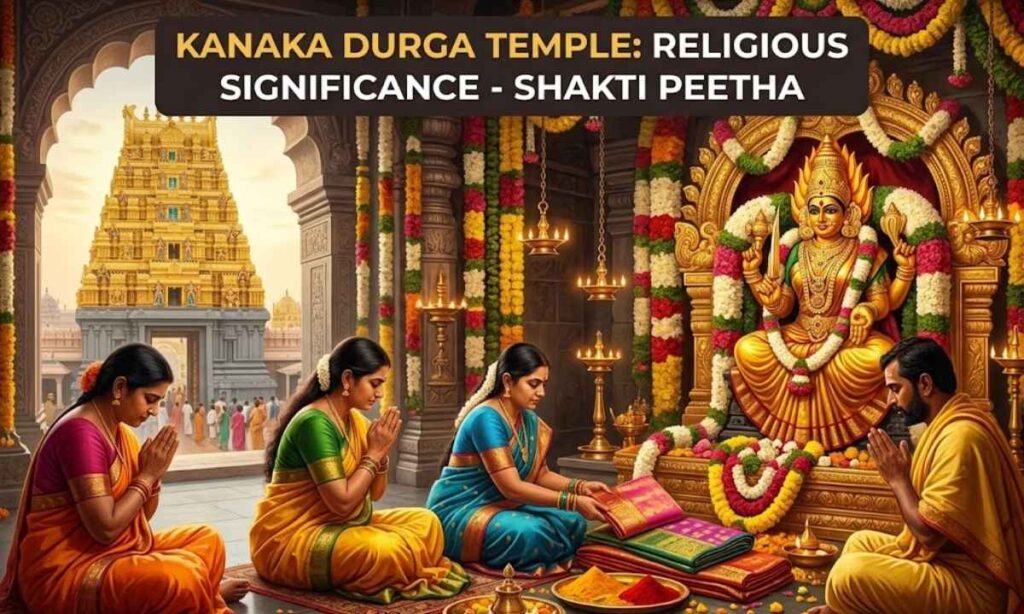
For devotees, the temple is a place of deep faith, where they come to seek the mother’s blessings, courage, and protection.
Who Is Goddess Kanaka Durga?
Kanaka means gold, and Kanaka Durga is the golden form of Durga. She is worshipped as a protector of her devotees and a bringer of prosperity. Many people also see her as a loving mother who answers sincere prayers.
The Significance of the Goddess’s Eight-Armed Form
The goddess is shown with eight arms, each holding a weapon or sacred object, as she stands over Mahishasura. The form is a symbol of power, courage, and victory of good over evil. Many devotees explain the multiple arms as a reminder of her ability to protect from every direction.
The Temple’s Connection With Lord Malleswara
The temple is shared with Lord Malleswara Swamy, a form of Lord Shiva, who is regarded as the consort of the goddess. This is why the temple’s full name is Sri Durga Malleswara Swamy Varla Devasthanam. Devotees usually pray to both deities during a visit.
Why Devotees Visit the Temple
Pilgrims visit to seek blessings, thank the goddess for answered prayers, and celebrate festivals. Students often pray for success, and a resource such as exam success wishes and prayers can offer additional encouragement before tests. Others seek courage and protection, and readers from other faiths who want protective prayers may read warfare prayer points with scriptures. These are matters of personal faith and not guaranteed outcomes.
Kanaka Durga Temple Timings and Darshan
Timings can differ between sources and may change on festival days. The details below are general guidance, so confirm the current schedule on the official website before you go.
Daily Temple Opening and Closing Times
Many visitor guides report that the temple opens in the early morning, around 4 or 5 AM, and closes in the evening, around 9 PM. Because reports differ, treat these as approximate and check the official schedule.
Darshan Hours and Ritual Breaks
Darshan is usually paused during certain rituals and offerings, so there may be short breaks during the day. These breaks can change on special days, so it is wise to plan some flexibility into your visit.
Free Darshan and Special Entry Darshan
General darshan is usually available through the regular queue, and the temple also offers paid special entry darshan with shorter waiting times. Prices are tiered and can change, so check official counters or the website for the current amounts.
Best Time of Day to Visit
Early morning is often the calmest and coolest time, with smaller crowds. Weekdays are usually quieter than weekends and festival days. If you enjoy a fresh start to the day with prayer, you may also like a good morning prayer for my love before you leave for the temple.
How Festival Days Affect Darshan Timings
During Dasara and other major festivals, the temple may stay open longer, change queue routes, or offer special arrangements. Expect very large crowds and longer waiting times on these days.
Kanaka Durga Temple Tickets and Online Booking
Entry through the general queue is generally free, while special darshan and some sevas require tickets. Ticket categories, prices, and booking methods can change, so use only official sources.
How to Check Official Darshan Tickets
Visit the official temple website or the official counters near the temple to see current ticket categories and prices. Avoid unofficial agents or unknown websites that claim to sell darshan tickets.
Online Booking for Special Darshan
Where online booking is available, it is usually offered through the temple’s official website or its authorized booking pages. Keep a digital or printed copy of your confirmation and carry a valid photo ID.
How to Check Seva and Puja Availability
Seva and puja options vary by day and season, and some are suspended during festivals. Check the official website or the temple office for the current list and timings.
Important Booking Tips for Visitors
| Tip | Why It Helps |
| Book early | Special darshan slots can fill up quickly during Dasara and weekends |
| Use only official channels | Protects you from fake websites and agents |
| Carry photo ID | Often required for booked services |
| Arrive before your slot | Allows time for security checks and queues |
Kanaka Durga Temple Dress Code and Visitor Rules
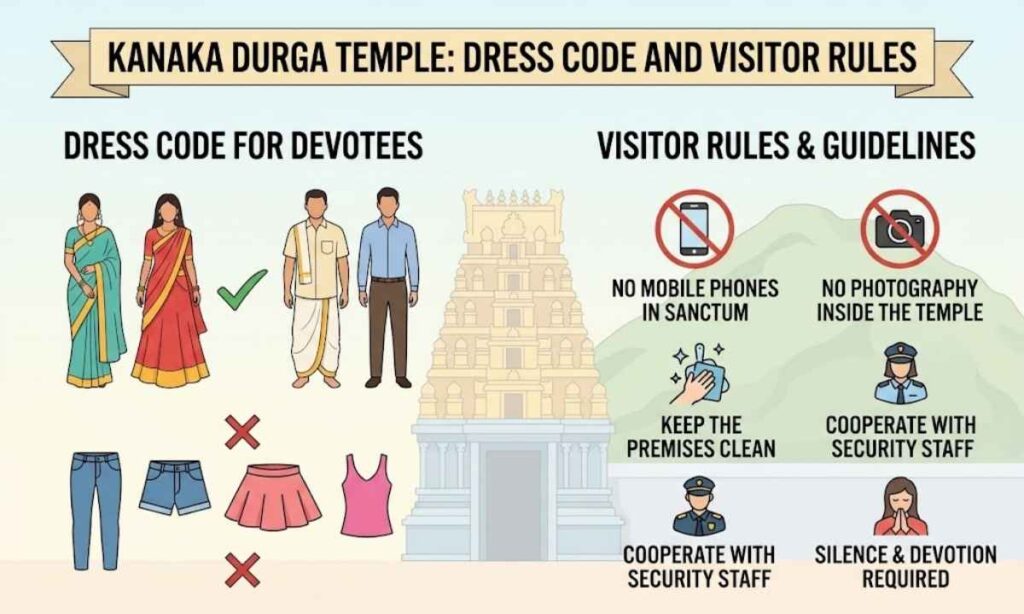
The temple asks visitors to dress modestly and traditionally as a sign of respect. Rules can be updated, so check the latest guidance before your visit.
Recommended Clothing for Men
Men usually wear a dhoti, kurta-pajama, or simple, clean shirt and trousers. Shorts and sleeveless tops are best avoided.
Recommended Clothing for Women
Women usually wear a saree, salwar kameez, or other modest traditional clothing, and some visitors report that a scarf (dupatta) is expected. Shorts and short or revealing clothing should be avoided.
Mobile Phones, Photography, and Personal Belongings
Mobile phone use and photography are restricted inside the sanctum area. Visitors may be asked to deposit phones and bags at a cloakroom or leave them behind, so carry only what you need.
Temple Etiquette and Security Checks
Expect security checks at the entrance, and follow queue instructions politely. Keep your voice low, avoid pushing, and respect other devotees. Respect for different devotional traditions around the world is part of good etiquette, whether you are reading about this temple or about traditions such as Santa Muerte prayer in English, which belongs to a very different path.
Festivals Celebrated at Kanaka Durga Temple
The temple is most famous for its grand Dasara festival, but it also celebrates many other religious events throughout the year.
Dasara and Navratri Celebrations
Dasara, also called Navratri, is the temple’s biggest festival, celebrated over about ten days in the autumn season. The temple is decorated, special rituals are held, and large crowds of devotees arrive from across India and abroad. The exact dates are set each year according to the Hindu calendar, so check the official schedule.
The Nine-Day Goddess Alankaram Tradition
During the festival, the goddess is decorated in a different form (alankaram) each day, such as Annapurna, Gayatri, Lalitha Tripura Sundari, and Mahishasuramardini. The list and order are announced by the temple each year.
Vijayadashami Celebrations
Vijayadashami marks the end of the festival and the victory of good over evil. Special rituals and processions are held, and the day is celebrated with great devotion.
Krishna River Festivals and Other Religious Events
The festival is traditionally followed by a boat festival (Teppotsavam) on the Krishna River, subject to river conditions and official arrangements. Other events include Bhavani Deeksha, in which devotees wear special clothing and observe a period of discipline. Community prayer gatherings like these are common in many faiths, and readers may see a similar spirit in prayer points for church growth.
Pujas and Sevas at Kanaka Durga Temple
The temple offers daily rituals and a number of special sevas that devotees can book or join.
Daily Worship and Rituals
The temple follows a daily schedule of rituals, including early morning worship, offerings, and evening prayers. Regular spiritual discipline is valued in many traditions, and readers who are working on personal habits may also read pornography prayer points with scriptures as a resource from another faith.
Special Puja and Seva Options
Common options include Astothara Namarchana, Sahasra Namarchana, and Kumkumarchana. Availability and ticket prices vary, so check with the official office.
Offerings and Prasadam
Devotees commonly offer flowers, coconuts, and sarees to the goddess, and receive prasadam after darshan. Many pilgrims also take home sweet prasadam for family and friends.
How to Verify Current Seva Availability
Check the temple’s official website, the information counters, or the temple office near the entrance. Special days can change the schedule at short notice.
Discover more Durga Maa Puja: Significance, Rituals, Mantras, and Worship Guide.
How to Reach Kanaka Durga Temple
Vijayawada is well connected by air, rail, and road, and the temple is close to the city center.
Nearest Airport
The nearest airport is Vijayawada Airport at Gannavaram, which is located outside the city. From there, you can take a taxi or a cab to the temple. Travel time depends on traffic.
Vijayawada Railway Station
Vijayawada Junction is one of the busiest railway stations in South India, and the temple is a short drive from it. Autos, taxis, and city buses are easy to find outside the station.
Bus Services and Road Connectivity
The city bus stand and the main bus services connect Vijayawada with Hyderabad, Visakhapatnam, Chennai, and other cities. Local buses and autos run frequently to the temple area.
Reaching the Temple From Vijayawada City
From most parts of the city, the temple can be reached by auto, cab, or local bus in a short time. During Dasara, traffic diversions are common, so allow extra time.
Hill Access and Available Transport Options
The temple is on a hill, and access is usually by road and by steps. Vehicle access, parking, and shuttle arrangements can change, especially during festivals, so check current instructions from the temple or local police.
Facilities Available at Kanaka Durga Temple
The temple provides basic facilities for pilgrims, and arrangements improve during major festivals.
Parking and Transport Facilities
Parking is limited near the temple, and rules can change during festivals. Using public transport or a cab is often easier.
Drinking Water and Rest Areas
Drinking water points and waiting areas are generally available along the queue. Carry a small water bottle if allowed, and take breaks if the line is long.
Food and Prasadam Facilities
The temple offers prasadam and, on many days, free meal programs (annadanam). Availability and timings can change.
Accessibility Considerations for Elderly Visitors
Because the temple is on a hill, climbing steps can be tiring. Ask the temple staff about assisted access or special arrangements for older visitors and people with limited mobility.
Read more Durga Chalisa: Full Lyrics in Hindi and English With Meaning.
Places to Visit Near Kanaka Durga Temple
Many attractions are within a short distance, so you can combine the visit with sightseeing.
Prakasam Barrage
The barrage is a long bridge-like dam over the Krishna River and offers beautiful views, especially around sunset.
Bhavani Island
Bhavani Island is a large river island with gardens and water activities. It is reached by boat and is popular with families.
Other Religious and Cultural Attractions in Vijayawada
You can also visit Undavalli Caves, which have rock-cut architecture, and several other temples in the city. Some visitors also enjoy local markets and food streets.
Suggested Half-Day or Full-Day Visit Plan
| Time | Suggested Activity |
| Early morning | Darshan at Kanaka Durga Temple |
| Late morning | Breakfast and rest, or a short visit to nearby shrines |
| Afternoon | Undavalli Caves or Bhavani Island |
| Evening | Walk or sunset view at Prakasam Barrage |
Travel Tips for Visiting Kanaka Durga Temple
A little planning makes the visit more comfortable and meaningful.
Best Season to Visit
The cooler months from November to February are the most comfortable for sightseeing. Summers in Vijayawada can be very hot, so plan visits for early morning if you travel then.
How to Avoid Long Queues
Go early on a weekday, avoid festival and weekend peaks, and consider booking special darshan through official channels. Be patient, as lines can move slowly during busy periods.
What to Carry for Darshan
| Item | Purpose |
| Photo ID | Needed for bookings and security |
| Traditional, modest clothing | Follows the dress code |
| Small bag or none | Phones and bags may be restricted |
| Water bottle and cash | For comfort and offerings |
| Booking confirmation | For special darshan or seva |
Tips for Visiting During Dasara
Expect very large crowds, long queues, and traffic diversions. Book accommodation and transport well in advance, and follow all instructions from temple staff and police.
Planning a Comfortable Visit With Children or Older Adults
Choose early morning, carry snacks and water, and plan rest breaks. Some people like to start the week with prayer and a calm plan, and a new week prayer for my love can be a gentle companion to that habit.
Frequently Asked Questions
Where is Kanaka Durga Temple located?
The temple is on Indrakeeladri Hill in Vijayawada, Andhra Pradesh, beside the Krishna River.
What are the Kanaka Durga Temple timings?
Visitors commonly report opening in the early morning and closing around 9 PM. Check the official website for current timings.
Is there an entry fee for Kanaka Durga Temple?
General darshan is usually free, while special darshan and some sevas need tickets. Prices change, so confirm officially.
How can I book Kanaka Durga Temple darshan online?
Use the official temple website or its authorized booking pages. Avoid unofficial agents and websites.
What is the dress code for Kanaka Durga Temple?
Wear modest, traditional clothing such as a saree, salwar kameez, kurta, or dhoti. Avoid shorts and revealing clothes.
Why is Kanaka Durga Temple famous?
It is famous as a major Devi shrine on Indrakeeladri Hill with a self-manifested goddess. Its grand Dasara festival draws huge crowds.
Which festival is most important at the temple?
Dasara, also called Navratri, is the most important festival. It lasts about ten days with daily alankarams.
How far is the temple from Vijayawada Railway Station?
The temple is a short drive from the station, usually around 10 to 15 minutes depending on traffic. Autos and buses are easily available.
Can visitors drive or take transport up the hill?
Access is usually by road and steps, but vehicle rules can change, especially during festivals. Check current instructions on the day.
Is photography allowed inside the temple?
Photography and mobile phone use are generally restricted inside the sanctum area. Follow the signs and staff instructions.
Conclusion
Kanaka Durga Temple is a historic and deeply loved shrine that combines faith, legend, and festival tradition on the banks of the Krishna River. It is a meaningful place for pilgrims and also a rewarding stop for travelers who want to understand Indian temple culture. Before you go, verify current timings, ticket details, and dress rules on the official website. Plan ahead, especially during Dasara, and visit with patience and respect.


2 thoughts on “Kanaka Durga Temple: History, Significance, Timings, and Travel Guide”