

Maa Durga is one of the most revered goddesses in Hinduism, honored as a symbol of strength, protection, courage, and the triumph of good over evil. Durga Maa Puja is the act of worshipping her with prayers, offerings, mantras, and aarti, either at home or in a temple. Devotees believe that sincere worship brings courage, peace of mind, and inner strength. In this guide, you will find the meaning of the puja, the items you need, a simple home worship method, key mantras, and answers to common beginner questions.
To make the basic worship process clear, here is a quick overview of the main puja elements.
| Puja Element | Purpose |
| Maa Durga image or idol | Focus of worship |
| Flowers and garland | Devotional offering |
| Diya and incense | Part of traditional worship |
| Fruits and prasad | Food offerings |
| Mantra and prayer | Devotion and spiritual reflection |
| Aarti | Traditional closing worship ritual |
What Is Durga Maa Puja?
Durga Maa Puja is a Hindu devotional practice dedicated to Goddess Durga. It includes cleaning the worship space, offering flowers and food, chanting mantras, and performing aarti. It can be a short daily prayer or a grand festival ritual.
Who Is Maa Durga in Hinduism?
Maa Durga is the Divine Mother, a powerful form of the goddess often shown riding a lion or tiger and carrying many weapons. She is seen as a protector who defeats evil forces, and she is closely linked with Shakti, the divine feminine energy.
Why Do Devotees Worship Goddess Durga?
Devotees worship Durga to seek courage, protection, and strength during hard times. Many families pray to her for the well-being of loved ones, success in life, and freedom from fear. These are religious beliefs and acts of faith, not guaranteed outcomes.
The Spiritual Meaning of Durga Maa Puja
Spiritually, the puja is a reminder to face difficulties with courage and discipline. Many see her weapons as symbols of inner qualities, and her victory over evil as the victory of good habits and clear thinking over negativity.
Significance of Durga Maa Puja
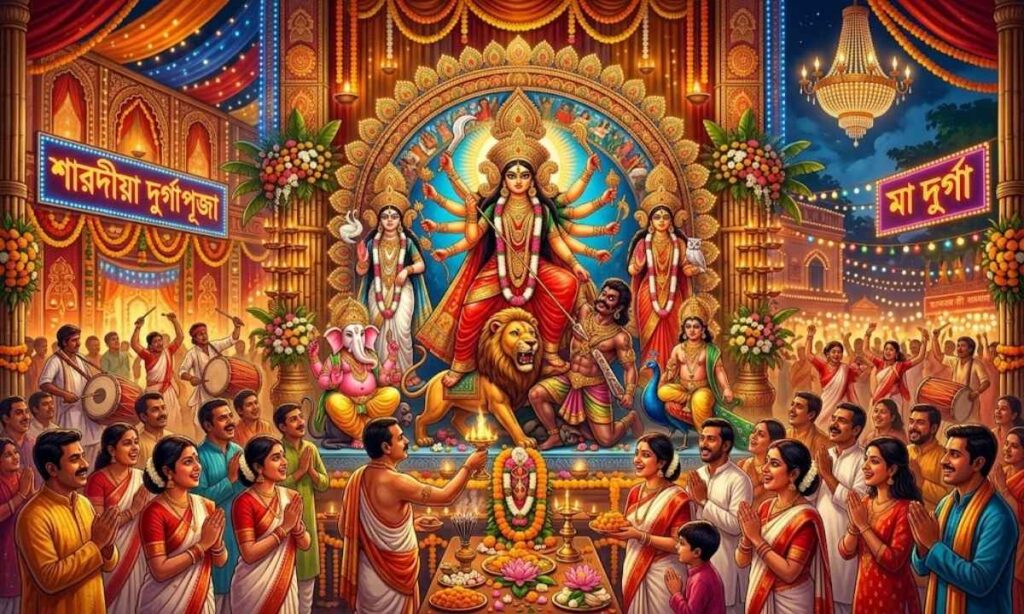
The puja carries deep religious and cultural meaning, and it brings families and communities together in prayer.
The Victory of Good Over Evil
According to Hindu tradition, Durga defeated the buffalo demon Mahishasura after a fierce battle. This story is why her worship is linked with the triumph of righteousness, and it is retold during Navratri and Durga Puja festivals.
Maa Durga as a Symbol of Strength and Protection
Durga is often called the protector of her devotees. Many people turn to her when they feel afraid or weak, and they pray for the courage to stand up for what is right.
Devotion, Courage, and Inner Peace
Regular prayer can help a person feel calmer and more focused. Devotees often describe the puja as a time for quiet reflection. Those seeking spiritual strength to overcome unhealthy habits may also read pornography prayer points as a supportive resource for self-discipline.
Read more Kanaka Durga Temple: History, Significance, Timings, and Travel Guide.
When Is Durga Maa Puja Celebrated?
Durga Maa Puja can be done on any day, but it is celebrated most widely during Navratri and the Durga Puja festival. Exact dates change every year, so check a Hindu calendar (panchang) for the current schedule.
Durga Puja During Sharad Navratri
Sharad Navratri falls in the autumn months, usually in September or October. It is the most popular period for Durga worship, with nine nights of prayer that end with Vijayadashami (Dussehra).
Durga Puja During Chaitra Navratri
Chaitra Navratri takes place in spring, usually in March or April. Many families observe fasting and daily puja during these nine days, and it also marks the start of the Hindu new year in many regions.
Durga Puja During Durga Puja Festival
The Durga Puja festival is especially grand in West Bengal and other eastern regions, with decorated pandals and idols. It is celebrated over several days in the autumn season, leading up to Dashami.
How Dates Are Determined by the Hindu Lunar Calendar
Hindu festivals follow the lunar calendar, so their dates shift each year in the Gregorian calendar. Local temples and trusted panchang sources give the correct tithi and timings for your region.
Durga Maa Puja Samagri: Essential Items
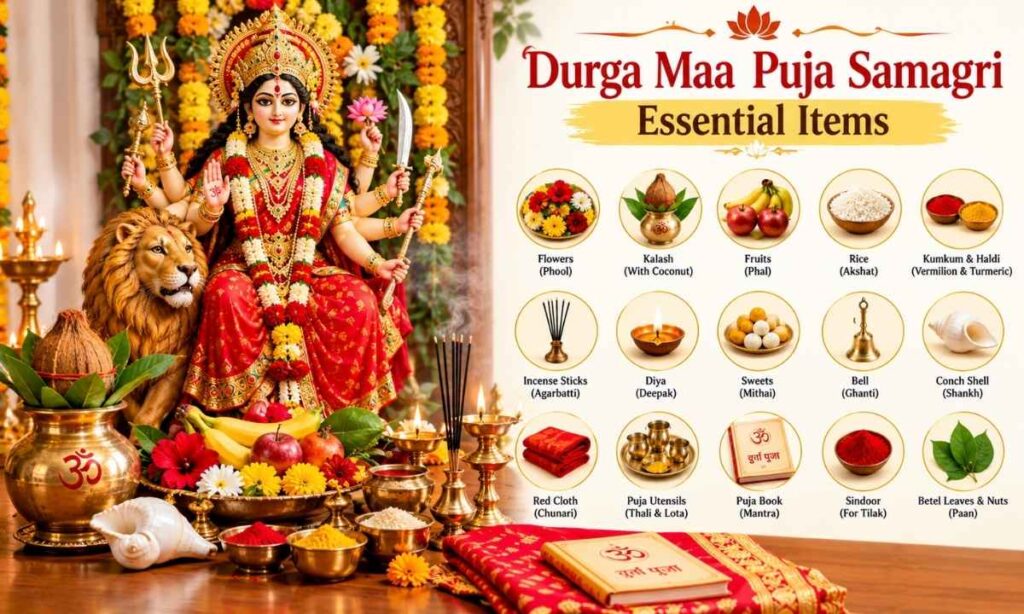
You do not need expensive items. A clean space, sincere devotion, and a few basic things are enough for a home puja. Here is a simple checklist.
| Item | Purpose |
| Image or idol of Maa Durga | Focus of worship |
| Flowers and garland | Offering of devotion |
| Diya, incense, camphor | Light and fragrance for worship and aarti |
| Fruits, sweets, prasad | Food offerings to the goddess |
| Water, kumkum, rice | Used in traditional rituals |
| Puja thali | Holds the items together |
Flowers, Garland, and Fresh Leaves
Red hibiscus is widely offered to Maa Durga, along with marigolds and roses. Fresh mango leaves and a garland are often used to decorate the altar. Always choose clean, fresh flowers.
Diya, Incense, and Camphor
A lit diya symbolizes light and the removal of darkness. Incense sticks and camphor are used during worship and aarti to create a pure and peaceful atmosphere.
Fruits, Sweets, and Other Offerings
Seasonal fruits, sweets, coconut, and homemade prasad are common offerings. Many families prepare simple vegetarian dishes with care and offer them before eating.
Water, Kumkum, Rice, and Puja Thali
A small pot of clean water, kumkum, and unbroken rice are used for tilak and offerings. A puja thali keeps everything organized and easy to carry during the ritual.
Optional Items According to Family Tradition
Some families add a red cloth, bangles, or a kalash. These are optional and depend on regional customs, so follow what your family or community practices.
How to Perform Durga Maa Puja at Home
This simple step-by-step method suits beginners. Families may add or change steps based on their tradition.
Step 1: Clean the Puja Area and Prepare the Altar
Clean the space where you will worship and spread a clean cloth on a raised platform. Wash your hands and wear clean clothes before you begin.
Step 2: Place the Image or Idol of Maa Durga
Place the image or idol of Maa Durga on the altar, facing you comfortably. Arrange the flowers, diya, and other items nearby so everything is within reach.
Step 3: Begin With a Prayer and Sankalp
Light the diya and take a moment of silence. Make a sankalp, which is a sincere intention for your prayer, such as seeking strength or peace for your family.
Step 4: Offer Flowers, Water, and Prasad
Offer flowers, a little water, kumkum, and rice to the goddess. Place the fruits and sweets in front of her as an offering of gratitude.
Step 5: Chant Durga Maa Mantras
Chant one or more mantras slowly and with focus. Even a short mantra repeated sincerely is considered meaningful. You can find examples in the next section.
Step 6: Perform Durga Maa Aarti
Light camphor or a diya and wave it in a clockwise circle before the idol while singing or reciting the aarti. Family members can join in together.
Step 7: Offer Prasad and Conclude the Puja
End with a short prayer of thanks, then share the prasad with family members. Bow with respect and ask for forgiveness for any mistakes during the puja.
Powerful Durga Maa Mantras for Worship
Mantras are chanted to focus the mind and express devotion. Transliterations can vary slightly by region and tradition, so verify with a trusted priest or religious source if you want exact pronunciation.
Durga Maa Beej Mantra
Om Dum Durgayei Namah
This is a short seed (beej) mantra that bows to Goddess Durga. It is easy for beginners and is often repeated 108 times with a mala.
Sarva Mangala Mangalye Mantra
Sarva-mangala-mangalye shive sarvartha-sadhike, sharanye tryambake gauri narayani namostute
This well-known verse praises the goddess as the auspicious one who fulfills all purposes and gives refuge. It is commonly recited in prayers to Devi.
Durga Gayatri Mantra
Om Katyayanaya Vidmahe, Kanyakumari Dheemahi, Tanno Durgih Prachodayat
This Gayatri-style mantra asks for the goddess to inspire and guide the devotee. Different traditions may recite slightly different versions.
How to Chant Durga Mantras With Devotion
Sit in a quiet place, keep your back straight, and chant slowly. Focus on the meaning, not only the words. If you are unsure about pronunciation, listen to a trusted recitation first.
Meaning and Significance of the Mantras
The beej mantra is a direct salutation, the Sarva Mangala verse is a prayer for blessings and refuge, and the Gayatri mantra is a request for guidance. Devotees chant them as acts of faith and reflection.
Durga Maa Aarti and Prayers
Aarti is the closing ritual of the puja, and it expresses gratitude and love for the goddess.
Why Devotees Perform Maa Durga Aarti
Aarti offers light to the deity as a sign of respect and thanks. It is also a joyful moment when families sing together and feel connected through devotion.
How to Perform Aarti During Puja
Light a diya or camphor on a plate, then slowly move it in clockwise circles in front of the idol. Ring a small bell and sing the aarti with a calm, focused mind. Many people start their day with prayer, and some also like a good morning prayer for my love to bless family and loved ones.
Short Prayers for Strength, Courage, and Protection
You can also pray in your own words, asking Maa Durga for courage, protection, and wisdom. Readers from other faith traditions seeking protection may find warfare prayer points with scriptures meaningful, and those looking for further self-discipline may read pornography prayer points with scriptures.
Durga Maa Puja During Navratri
Navratri means “nine nights,” and each day is dedicated to a different form of the goddess.
The Nine Forms of Goddess Durga
| Day | Form of Durga |
| Day 1 | Shailaputri |
| Day 2 | Brahmacharini |
| Day 3 | Chandraghanta |
| Day 4 | Kushmanda |
| Day 5 | Skandamata |
| Day 6 | Katyayani |
| Day 7 | Kalaratri |
| Day 8 | Mahagauri |
| Day 9 | Siddhidatri |
Daily Worship During the Nine Days
Many devotees worship the form of the day with specific flowers, offerings, and prayers. Some families keep a daily diya burning throughout Navratri as a mark of devotion.
Fasting and Food Traditions During Navratri
Many people fast or eat only simple vegetarian foods during Navratri. Fasting rules differ widely, so follow your family tradition and your health needs, and consult a doctor if you have a medical condition.
Kanya Puja and Its Religious Significance
Kanya Puja honors young girls as living forms of the goddess. Devotees invite them to their homes, wash their feet, offer food, and give small gifts, usually on Ashtami or Navami.
Ashtami, Navami, and Vijayadashami
Ashtami and Navami are important days of worship near the end of Navratri. Vijayadashami, also called Dussehra, celebrates the victory of good over evil and brings the festival to a close.
What Can You Offer to Maa Durga?
Offerings are given with love and devotion. The value is in the sincerity, not the cost.
Flowers and Traditional Offerings
Red hibiscus, marigolds, and roses are popular. Along with flowers, devotees offer kumkum, rice, a red cloth, and sometimes coconut.
Fruits, Sweets, and Bhog
Seasonal fruits, milk-based sweets, and halwa are common offerings. Bhog is the food offered to the deity, which is then shared as prasad.
Vegetarian Offerings and Regional Customs
Most home pujas use simple vegetarian offerings. Some regions have their own special dishes and customs, so it is best to follow your family’s or community’s practice.
Why Customs May Differ Across Families and Regions
Hinduism is a diverse tradition, and puja methods change from place to place. Devotional practices differ around the world, as seen in other traditions such as Santa Muerte prayer in English, which is very different from Durga worship. No single method is the only right one.
Discover more Durga Chalisa: Full Lyrics in Hindi and English With Meaning.
Common Mistakes to Avoid During Durga Maa Puja
A few simple errors can be avoided with some preparation and care.
Forgetting to Prepare the Puja Area
Do not start before the area is clean and the items are ready. Keep your samagri in place so you do not need to leave the puja halfway through.
Following Rituals Without Understanding Their Meaning
Try to learn why each step is done. Knowing the meaning makes the puja more heartfelt. Students often pray for focus and confidence, and a resource like exam success wishes and prayers can also offer encouragement before tests.
Assuming Every Family Must Follow Identical Customs
Regional customs are not universal rules. If a neighbor or relative follows a different method, it does not make yours wrong. Respect each family’s tradition.
Maintaining Respect, Cleanliness, and Devotion
Keep the space tidy, speak gently, and focus on your prayer. The most important part of puja is sincerity and respect. Communities that gather for worship also pray for growth and unity, like these prayer points for church growth from another faith, which reflect the same spirit of community prayer.
Frequently Asked Questions
How do you perform Durga Maa Puja at home?
Clean the area, place Maa Durga’s image, light a diya, and make an offering of flowers and prasad. Then chant a mantra and finish with aarti.
Which day is best for worshipping Maa Durga?
Navratri, especially Ashtami and Navami, is considered very auspicious. Many devotees also worship her on Tuesdays and Fridays.
Which mantra is chanted for Maa Durga?
Common choices are Om Dum Durgayei Namah, the Sarva Mangala Mangalye verse, and the Durga Gayatri mantra. Choose one that feels comfortable.
What should be offered to Maa Durga?
Red hibiscus, fruits, sweets, coconut, kumkum, and rice are common offerings. Customs vary, so follow your family tradition.
Can we perform Durga Maa Puja every day?
Yes, many devotees offer simple daily prayers to Maa Durga. A short prayer with a diya and flowers is enough.
What is the difference between Durga Puja and Navratri?
Navratri is a nine-night festival honoring the nine forms of the goddess. Durga Puja is a festival, especially popular in Bengal, celebrating Durga with idols and pandals.
Which flowers are traditionally offered to Maa Durga?
Red hibiscus is the most traditional choice, along with marigolds and roses. Use fresh and clean flowers.
Can beginners perform Durga Puja at home?
Yes, beginners can start with a simple puja using basic items and a short mantra. Sincere devotion matters more than elaborate rituals.
Conclusion
Durga Maa Puja is a heartfelt way to seek strength, courage, and protection through devotion. It honors the goddess as a symbol of the victory of good over evil, and it can be done simply at home with a clean space, flowers, a diya, mantras, and aarti. Rituals and customs vary by region and family, so follow the tradition that is meaningful to you. Above all, pray with sincerity, respect, and a calm heart.